Be yourself; Everyone else is already taken.
— Oscar Wilde.
This is the first post on my new blog. I’m just getting this new blog going, so stay tuned for more. Subscribe below to get notified when I post new updates.
Be yourself; Everyone else is already taken.
— Oscar Wilde.
This is the first post on my new blog. I’m just getting this new blog going, so stay tuned for more. Subscribe below to get notified when I post new updates.
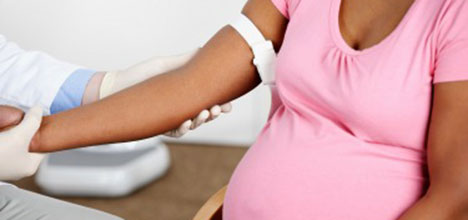
Lead is toxic and particularly harmful for developing nervous systems. Lead can be passed through a pregnant woman’s placenta to the fetus, or through breast milk to a baby.
To minimize the risk to you and your baby from lead, take a moment to educate yourself about making your environment more lead safe.
Yes, you can avoid exposure to any known sources of lead before and during pregnancy.
Yes, a blood lead test can be done to see how much lead is present. Although most people will have some lead in their blood, levels greater than 5 micrograms per deciliter (μg/dL) indicate that there is some exposure that needs to be addressed. While there is no clear safe level of lead in the body, the goal is to have the lowest level possible. Women who had exposure to lead in the past should have levels checked.
The Centers for Disease Control and Prevention (CDC) recommends blood lead testing for pregnant and lactating women with one or more important risk factors for lead exposure and increased blood lead levels:
The most serious effect of high levels of lead during pregnancy can cause miscarriage and stillbirth. Other pregnancy problems such as low birth weight and premature delivery can also occur. Additionally, high maternal lead levels can cause learning and behavior problems in exposed babies. It is unlikely that exposure to lead during pregnancy would significantly increase the chance for major physical birth defects.
Generally speaking, breastfeeding is safe for women with elevated blood lead levels; however, babies of breastfeeding mothers with very high blood lead levels should be closely monitored.
A blood test should be performed within two weeks of baseline measurement and then at least on a monthly basis:

Pregnancy is a time of anticipation, excitement, preparation, and, for many new parents, uncertainty. The nine months of pregnancy will give you time to have your questions answered, calm your fears, and prepare yourself for the realities of parenthood. This section contains some guidelines to help you with the most important of these preparations.
5 Tips to Reduce the Risk of Birth Defects

Not all birth defects can be prevented. But you can increase your chances of having a healthy baby by managing health conditions and by adopting healthy behaviors before and during pregnancy.
Taking care of yourself and doing what’s best for you is also best for your baby!
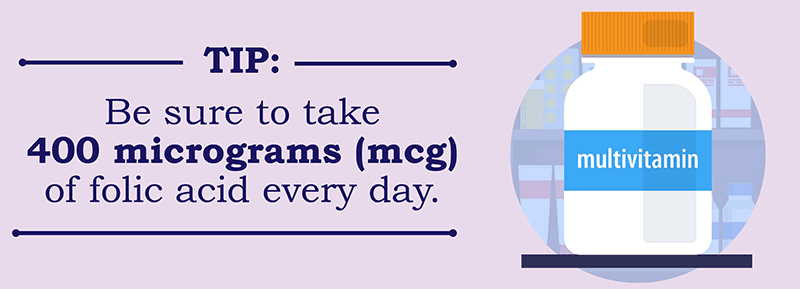
Folic acid is important because it can help prevent some major birth defects of the baby’s brain and spine. These birth defects develop very early during pregnancy when the neural tube—which forms the early brain and the spinal cord—does not close properly. You need to start taking folic acid at least one month before becoming pregnant and continue during pregnancy.
In addition to eating foods with natural folate, you can:
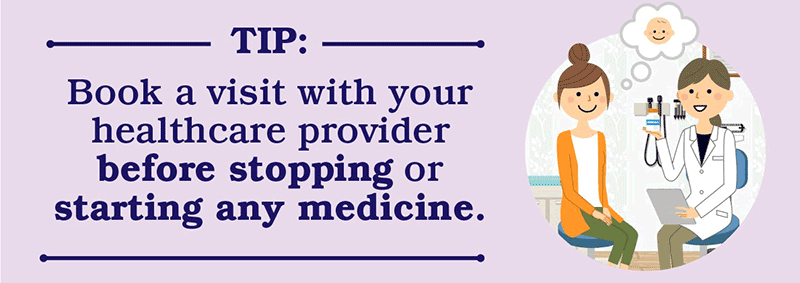
Many women need to take medicine to stay healthy during pregnancy. If you are planning to become pregnant, discuss your current medicines with a healthcare provider, such as your doctor or pharmacist. Creating a treatment plan for your health condition before you are pregnant can help keep you and your developing baby healthy.
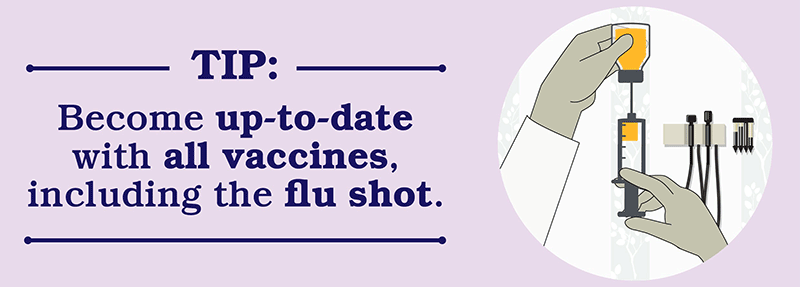
Vaccines help protect you and your developing baby against serious diseases. Get a flu shot and whooping cough vaccine (also called Tdap) during each pregnancy to help protect yourself and your baby.
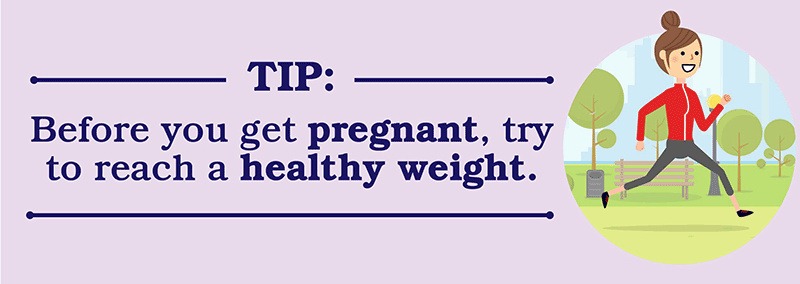
Obesity increases the risk for several serious birth defects and other pregnancy complications. If you are underweight, overweight, or have obesity, talk with your healthcare provider about ways to reach and maintain a healthy weight before you get pregnant. Focus on a lifestyle that includes healthy eating and regular physical activity.
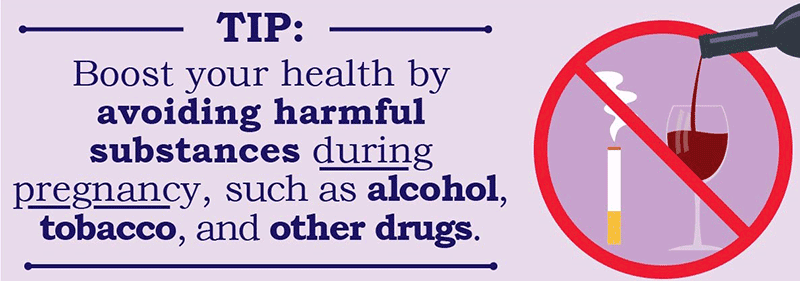

Infections during pregnancy can hurt both the mother-to-be and her baby.
Making healthy choices and taking a few extra precautions can improve the chances that babies will be born healthy.

If you are pregnant, you may have read that marijuana can help with morning sickness. After baby arrives, you might even consider using marijuana to relieve stress. Should you still breastfeed if you smoke marijuana? These are all tricky questions―especially as more states legalize marijuana for adult or medical use.
| The American Academy of Pediatrics (AAP) recommends women who are pregnant or breastfeeding avoid marijuana use. The American College of Obstetricians and Gynecologists (ACOG) also recommends that obstetrician-gynecologists counsel women against using marijuana while trying to get pregnant, during pregnancy, and while they are breastfeeding. |
|---|
Your pediatrician is a good source of information about potential risks of marijuana use on fetal, infant, and child development. Conversations can happen during discussions about the use of alcohol, other drugs, or contraception.
Just because marijuana is legal in some areas for medical or recreational use for those ages 21 and above, that doesn’t mean it’s safe―especially for children exposed to it prenatally or while breastfeeding. There’s just too much we don’t know about the ways it might affect children.
| The AAP is calling for additional research so that we can better understand how prenatal marijuana exposure affects our children―at every stage of their lives. |
|---|
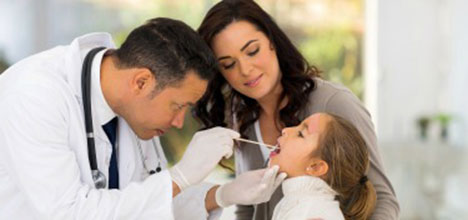
All children deserve high-quality medical care. As a parent, it is important to be aware of the most up-to-date treatment guidelines so you can be sure your child is getting the best care possible.
The following information from the American Academy of Pediatrics (AAP) lists some of the most common childhood illnesses and their approved treatments. The treatments discussed here are based on scientific evidence and best practices. However, there may be reasons why your pediatrician has different recommendations for your child, especially if your child has an ongoing medical condition or allergy. Your pediatrician will discuss any variations in treatment with you. If you have any questions about appropriate care for your child, please discuss them with your pediatrician.
Occasionally, mild infections—viral or bacterial—can develop into more serious infections.
Call your pediatrician if your child’s illness appears to change, becomes worse, does not go away after a few days, or if you are worried about any new symptoms that develop. If your child’s illness has worsened, or if he or she develops complications, your pediatrician may recommend a new treatment.
If you have any questions or concerns about appropriate care for your child, please discuss them with your pediatrician. While it may be tempting to go to a nearby after-hours clinic if your child is ill, your pediatrician knows your child best, has your child’s medical records, and is the best place to start for advice. Ask your pediatrician how he or she would like to be contact when the office is closed.
In fact, the AAP does not recommend retail-based clinics, telehealth services outside of the medical home, or acute care services without pediatric expertise for children younger than 2 years.
This is an example post, originally published as part of Blogging University. Enroll in one of our ten programs, and start your blog right.
You’re going to publish a post today. Don’t worry about how your blog looks. Don’t worry if you haven’t given it a name yet, or you’re feeling overwhelmed. Just click the “New Post” button, and tell us why you’re here.
Why do this?
The post can be short or long, a personal intro to your life or a bloggy mission statement, a manifesto for the future or a simple outline of your the types of things you hope to publish.
To help you get started, here are a few questions:
You’re not locked into any of this; one of the wonderful things about blogs is how they constantly evolve as we learn, grow, and interact with one another — but it’s good to know where and why you started, and articulating your goals may just give you a few other post ideas.
Can’t think how to get started? Just write the first thing that pops into your head. Anne Lamott, author of a book on writing we love, says that you need to give yourself permission to write a “crappy first draft”. Anne makes a great point — just start writing, and worry about editing it later.
When you’re ready to publish, give your post three to five tags that describe your blog’s focus — writing, photography, fiction, parenting, food, cars, movies, sports, whatever. These tags will help others who care about your topics find you in the Reader. Make sure one of the tags is “zerotohero,” so other new bloggers can find you, too.

 PEDIATRIC DISEASES