
Pregnancy is a time of anticipation, excitement, preparation, and, for many new parents, uncertainty. The nine months of pregnancy will give you time to have your questions answered, calm your fears, and prepare yourself for the realities of parenthood. This section contains some guidelines to help you with the most important of these preparations.
5 Tips to Reduce the Risk of Birth Defects
5 Tips to Reduce the Risk of Birth Defects

Not all birth defects can be prevented. But you can increase your chances of having a healthy baby by managing health conditions and by adopting healthy behaviors before and during pregnancy.
Taking care of yourself and doing what’s best for you is also best for your baby!
1. Be sure to take 400 micrograms (mcg) of folic acid every day.
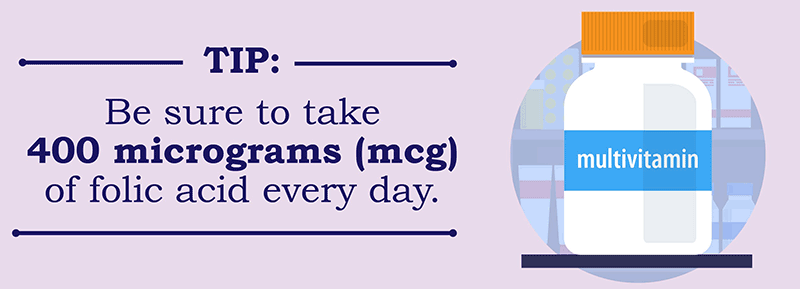
Folic acid is important because it can help prevent some major birth defects of the baby’s brain and spine. These birth defects develop very early during pregnancy when the neural tube—which forms the early brain and the spinal cord—does not close properly. You need to start taking folic acid at least one month before becoming pregnant and continue during pregnancy.
In addition to eating foods with natural folate, you can:
- Take a vitamin that has folic acid in it every day.
- Most vitamins sold in the United States have the recommended amount of folic acid women need each day. Check the label on the bottle to be sure it contains 100% of the daily value (DV) of folic acid, which is 400 mcg.
- Eat fortified foods.
- You can find folic acid in some breads, breakfast cereals, and corn masa flour.
- Be sure to check the nutrient facts label and look for one that has “100%” next to folic acid.
2. Book a visit with your healthcare provider before stopping or starting any medicine.
Many women need to take medicine to stay healthy during pregnancy. If you are planning to become pregnant, discuss your current medicines with a healthcare provider, such as your doctor or pharmacist. Creating a treatment plan for your health condition before you are pregnant can help keep you and your developing baby healthy.
3. Become up-to-date with all vaccines, including the flu shot.
Vaccines help protect you and your developing baby against serious diseases. Get a flu shot and whooping cough vaccine (also called Tdap) during each pregnancy to help protect yourself and your baby.
- Flu: You can get the flu shot before or during each pregnancy.
- Whooping Cough: You can get the whooping cough vaccine in the last three months of each pregnancy.
4. Before you get pregnant, try to reach a healthy weight.
Obesity increases the risk for several serious birth defects and other pregnancy complications. If you are underweight, overweight, or have obesity, talk with your healthcare provider about ways to reach and maintain a healthy weight before you get pregnant. Focus on a lifestyle that includes healthy eating and regular physical activity.
5. Boost your health by avoiding harmful substances during pregnancy, such as alcohol, tobacco, and other drugs.
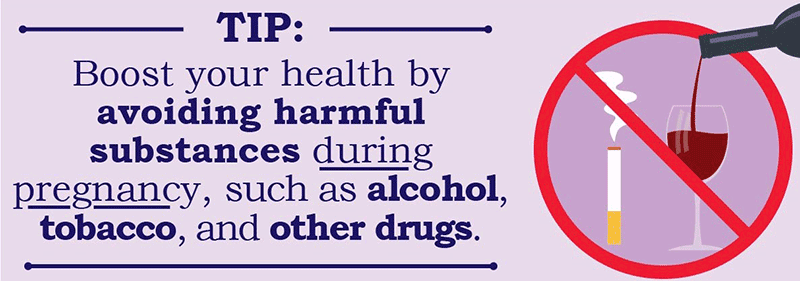
- Alcohol: There is no known safe amount of alcohol during pregnancy or when trying to get pregnant. Alcohol can cause problems for a developing baby throughout pregnancy, so it’s important to stop drinking alcohol when you start trying to get pregnant.
- Tobacco: Smoking causes cancer, heart disease, and other major health problems. Smoking during pregnancy can also harm the developing baby and can cause certain birth defects. Quitting smoking will help you feel better and provide a healthier environment for your baby.
- Other Drugs: Using certain drugs during pregnancy can cause health problems for a woman and her developing baby. If you are pregnant or trying to get pregnant and can’t stop using drugs―get help! A healthcare provider can help you with counseling, treatment, and other support services.
Additional Information:
Simple Steps to Prevent Infections During Pregnancy

Infections during pregnancy can hurt both the mother-to-be and her baby.
Making healthy choices and taking a few extra precautions can improve the chances that babies will be born healthy.
Here are 11 things you can do during pregnancy to protect yourself and your baby from infections.
- Maintain good hygiene and wash your hands often—especially when around or caring for children. Regular handwashing, particularly before and after certain activities, is one of the best ways to remove germs, avoid getting sick, and prevent infections. If soap and running water are not available, you can use alcohol-based hand gel. Learn how clean hands save lives.
- Cook your meat until it’s well done. The juices should run clear and there should be no pink inside. Do not eat hot dogs, luncheon meats, or deli meats, unless they are reheated until steaming hot. These undercooked meats and processed meats might contain harmful bacteria. Learn more about Listeria.
- Avoid unpasteurized (raw) milk and foods made from it. Do not eat soft cheeses such as feta, brie, and queso fresco unless they have labels that say they are pasteurized. Unpasteurized products can contain harmful bacteria. Learn more about raw milk dangers.
- Ask your doctor about Group B streptococcus (GBS). About 1 in 4 women carry this type of bacteria, but do not feel sick. An easy swab test near the end of pregnancy will show if you have this type of bacteria. If you do have GBS, talk to your doctor about how to protect your baby during labor. Learn more about GBS infections.
- Talk to your doctor about vaccinations. Some are recommended before you become pregnant, during pregnancy, or right after delivery. Having the right vaccinations at the right time can help keep you healthy and help keep your baby from getting very sick or having life-long health problems. Learn more about vaccinations during pregnancy and why the flu and Tdap vaccines are essential for pregnant moms.
- Get tested for sexually transmitted infections (STIs), such as HIV and hepatitis B, and protect yourself from them. Some people that have HIV, hepatitis B, or an STD do not feel sick. Knowing if you have one of these diseases is important. If you do, talk to your doctor about how you can reduce the chance that your baby will become sick. Learn more about preventing STIs.
- Avoid people who have an infection. Stay away from people who you know have infections, such as chickenpox or rubella, if you have not yet had it yourself or did not have the vaccine before pregnancy. Learn more about the MMR vaccine and the chickenpox vaccine.
- Protect against insects known to carry diseases. Stay abreast of developments in Zika virus in your area or places you might be traveling to. When mosquitoes and ticks are active, wear long-sleeved shirts and long pants when outside. Use Environmental Protection Agency (EPA) registered insect repellents with one of the following active ingredients: DEET, picaridin, IR3535, or oil of lemon eucalyptus (para-menthane-3,8-diol). Avoid travel to areas where infections can threaten you and your baby. Learn more about the Zika virus and pregnancy.
- Do not touch or change dirty cat litter and avoid contact with potentially contaminated soil. Have someone else do it. If you must change the litter yourself, be sure to wear gloves and wash your hands afterwards. Dirty cat litter and soil might contain a harmful parasite. Learn more about cats and toxoplasmosis.
- Stay away from wild or pet rodents, lizards and turtles, and their droppings. Have a pest control professional get rid of pests in or around your home. If you have a pet rodent, like a hamster or guinea pig, have someone else care for it until after your baby arrives. Some rodents might carry a harmful virus. Learn more about lymphocytic choriomeningitis virus (LCMV).
- Only take vitamins in the doses recommended by your doctor. Your doctor may recommend a daily prenatal vitamin pill, which includes folic acid, iron, calcium and other minerals, and the fatty acids docosahexaenoic acid (DHA) and arachidonic acid (ARA). Make sure your doctor knows about any other supplements you may be taking, including herbal remedies. Learn more about the benefits of folic acid.
Marijuana Use During Pregnancy & Breastfeeding FAQs
If you are pregnant, you may have read that marijuana can help with morning sickness. After baby arrives, you might even consider using marijuana to relieve stress. Should you still breastfeed if you smoke marijuana? These are all tricky questions―especially as more states legalize marijuana for adult or medical use.
| The American Academy of Pediatrics (AAP) recommends women who are pregnant or breastfeeding avoid marijuana use. The American College of Obstetricians and Gynecologists (ACOG) also recommends that obstetrician-gynecologists counsel women against using marijuana while trying to get pregnant, during pregnancy, and while they are breastfeeding. |
|---|
No amount of marijuana has been proven safe to use during pregnancy or while breastfeeding.
How does marijuana effect brain development?
- Studies show marijuana use during pregnancy and breastfeeding may have negative effects on the developing brain. Tetrahydrocannabinol (THC)―the compound in marijuana mostly responsible for its psychoactive effects―has been shown to cross the placenta and enter the brain of the developing fetus during pregnancy. Once in a baby’s system, it can “hijack” normal nerve cell growth that happens in the developing brain. For example, in some studies, prenatal marijuana exposure was linked with increased tremors and startle reflexes in newborns and a possibly higher risk of substance use disorder and mental illness among teens and adults. In other studies, marijuana use during pregnancy was associated with problems in problem-solving skills, memory, visual perception, behavior, attention, executive function, and impulse control in the children especially as they became teenagers and young adults.
Is today’s marijuana stronger than it was years ago?
- The THC concentration in marijuana has quadrupled since the 1980s―when studies linking marijuana use during pregnancy to child growth and behavior differences were conducted. Whether marijuana is smoked, vaped, or consumed in edibles and drinkables, the amount of THC reaching a fetus and newborn may be a lot higher than in the past.
If I smoke marijuana, can it pass into my breastmilk?
- Yes. You may pass the chemicals from marijuana to your baby through breastmilk. A study in the September 2018 Pediatrics confirms earlier findings that THC can transfer into breastmilk. The AAP also reminds that a mother’s ability to care for an infant may be impaired while using marijuana. Bottomline: If you are breastfeeding, don’t use marijuana.
Is marijuana safer than tobacco?
- No. Studies show that between 48% and 60% of marijuana users continue during their entire pregnancy, thinking it’s safer than tobacco. However, research also shows that when marijuana is smoked, carbon monoxide blood concentrations in the pregnant woman are 5 times higher than those when tobacco is smoked. This can mean less oxygen to be available for the fetus.
What should I know about secondhand marijuana smoke?
- Passive or secondhand smoke can be as much a concern with marijuana as it is with tobacco. Studies show people can be exposed to marijuana by inhaling it when the drug is smoked near them. It can cause a positive urine test for THC―which means the THC was in their blood. This means that if a pregnant or breastfeeding woman is exposed to marijuana smoke the THC can transfer to the mother’s blood and then to the fetus or mother’s breastmilk.
Is morning sickness a qualifying condition for medical marijuana?
- No. Chemotherapy-related nausea is a qualifying condition in most states with legalized medical marijuana. Although many women experience nausea during pregnancy, the use of medical marijuana in this specific case has never been studied or determined to be safe.
Are pediatricians mandated to report mothers who are using marijuana while pregnant or breastfeeding to child protective services?
- Yes. The Child Abuse and Prevention and Treatment Act (CAPTA) requires all states to have reporting policies and procedures for when newborns and other children are exposed to illegal substances. Because marijuana is still illegal under federal law, CAPTA applies to marijuana exposure in all states regardless of the legal status of marijuana use by adults in each state. Individual states may have their own policies about reporting exposure to marijuana through pregnancy and breastfeeding.
Remember: If you are pregnant or nursing, the safest choice for your child is to avoid marijuana.
Your pediatrician is a good source of information about potential risks of marijuana use on fetal, infant, and child development. Conversations can happen during discussions about the use of alcohol, other drugs, or contraception.
Just because marijuana is legal in some areas for medical or recreational use for those ages 21 and above, that doesn’t mean it’s safe―especially for children exposed to it prenatally or while breastfeeding. There’s just too much we don’t know about the ways it might affect children.
| The AAP is calling for additional research so that we can better understand how prenatal marijuana exposure affects our children―at every stage of their lives. |
|---|
 PEDIATRIC DISEASES